
Message from
Major Kenneth Lee, IV, MD, PhD - Program Director
Penn Surgery is committed to excellence and leadership. The faculty educate and mentor trainees who ultimately explore careers in a wide variety of surgical disciplines. We aim to maximize the technical, clinical, and academic abilities of our trainees to equip them with the tools to provide high-quality clinical care, to innovate, and to become future leaders. With the clinical productivity and the unique resources at the teaching hospitals, the Perelman School of Medicine, and the University of Pennsylvania, we offer unparalleled opportunity.
Major Kenneth Lee, IV, MD, PhD
Program Director, General Surgery Residency
Associate Professor of Clinical Surgery
Penn Surgery Intranet (internal use only)
The training program in General Surgery at the Hospital of the University of Pennsylvania has a long-standing tradition of excellence. We continually strive to create an educational environment that maximizes the surgical trainees' clinical and academic potential. Our goal has been and continues to be the development of future leaders in academic surgery. Ronald P. DeMatteo is the current Chair of the Department of Surgery and serves as a role model for what the Penn-trained resident can accomplish.
The training of general surgeons encompasses education in basic sciences, training in cognitive and technical skills, development of clinical knowledge and maturity, and acquisition of surgical judgment. Our program provides the opportunity for residents to learn in depth the fundamentals of basic science as applied to clinical surgery. The program provides robust experience in preoperative, operative, and postoperative care for complex, high acuity general surgery patients. Further, we continue to provide significant case volumes in areas that are increasingly phased out of general surgery training. These include transplant surgery, thoracic surgery, and vascular surgery. Residents are expected to become qualified practitioners of surgery who perform at a level beyond that expected of a board-certified general surgeon.
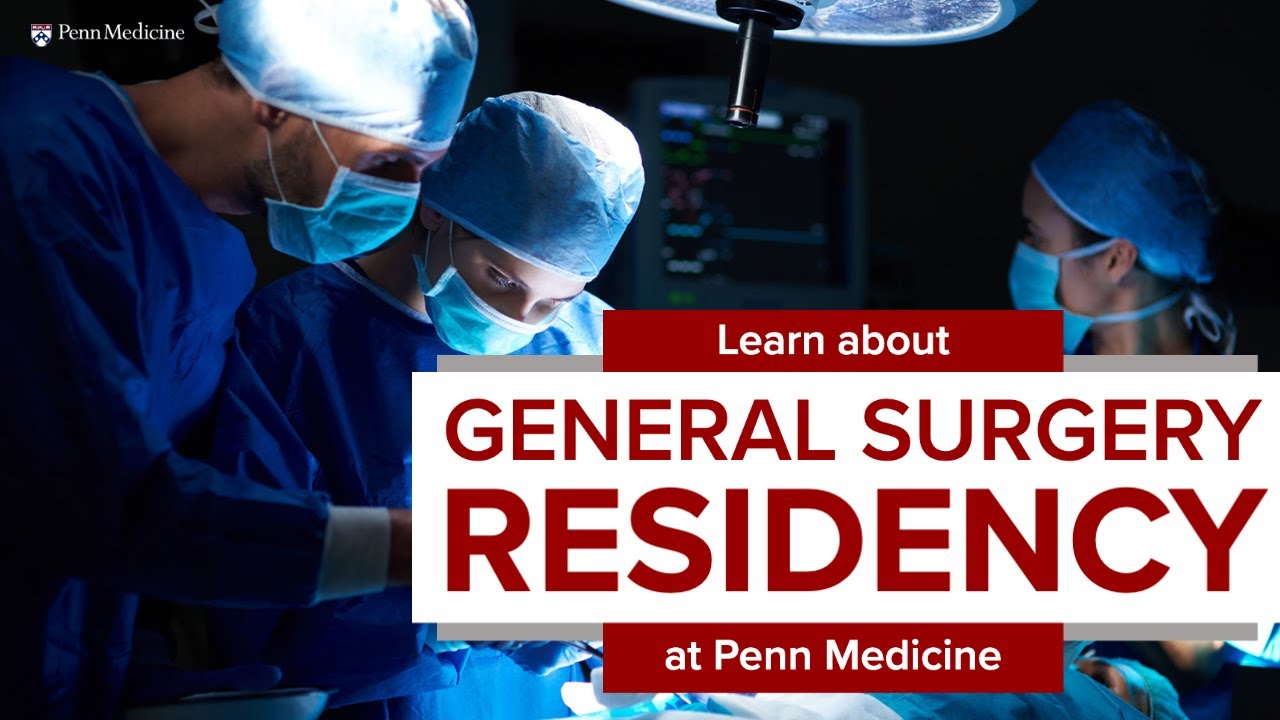
Operative skill is essential for the surgeon and can be acquired only through personal experience and training. Our graduates routinely graduate with case volumes exceeding nearly every other program in the nation. Further, our faculty are expected to provide graduated autonomy that takes into account individual experience, capability, and variabilities in rate of progress. We ultimately expect all graduates to be autonomous general surgeons who also have significant experience with innovative techniques and skillsets inherent to a quaternary care institution. The establishment of an inquiring and scholarly environment is the primary responsibility of the teaching staff. Only in such a milieu can residents develop clinical acumen that goes beyond technical skill. Further, the foundation established here for critical analysis and the development of the surgeon creates a philosophy of self-education that goes well beyond the completion of formal residency training. The teaching staff is well qualified to create and maintain such an environment and has sufficient diversity that all facets of surgery are represented. It is our expectation that the faculty provide ideal role models for the resident in training.
The Hospital of the University of Pennsylvania is the parent institution of the General Surgery Residency Training Program where residents spend approximately 70% of their training. The remaining 30% of training occurs at integrated and affiliated institutions selected for special educational experiences. Participating integrated hospitals include the Philadelphia Veterans Administration Medical Center (two blocks from HUP), Penn Presbyterian Medical Center (nine blocks from HUP and the home of the level 1 trauma center), Children's Hospital of Philadelphia (next door to HUP), and Pennsylvania Hospital (less than 1 mile from HUP). These sites vary substantially in volume, acuity, and complexity. Together, they combine to provide an ideal comprehensive training experience.
All residents who enter our program are expected to spend two years in academic development. This occurs after the third clinical year. Residents in this phase further develop their skillset for academic excellence. They have the freedom to pursue advanced degrees and capitalize on the University of Pennsylvania as an academic enterprise. There is a funded PhD track for a minority of interested residents. These years provide a foundation for a future practice in academic surgery as residents immerse themselves in a culture that combines surgical inquiry with the clinical forum.
In considering the selection of an academic surgical training program, the most critical elements include operative experience, research and educational opportunities, and the ultimate career paths of the graduating chief residents. In all three areas, our program has excelled. For this reason, we have continued to attract a motivated, diverse, and outstanding applicant pool. A high percentage of our graduates continue to pursue academic surgery positions, and we expect our most recent graduates to continue our tradition by becoming difference makers in the field.
Contact information
Contact the Program Coordinator,
Dametria Williams at Dametria.Williams@pennmedicine.upenn.edu
with questions or for additional information.
Contact the Program Coordinator,
Kimberly Burdziak at Kimberly.Burdziak@pennmedicine.upenn.edu
with questions or for additional information.
Policies, procedures and clinical sites
A comprehensive guide to the policies and procedures for the Department of Surgery education programs. View all of the Housestaff polices and procedures.
Penn Medicine has seven clinical sites, to learn more, visit our clinical sites page.