
Nuclear Radiology Fellowship
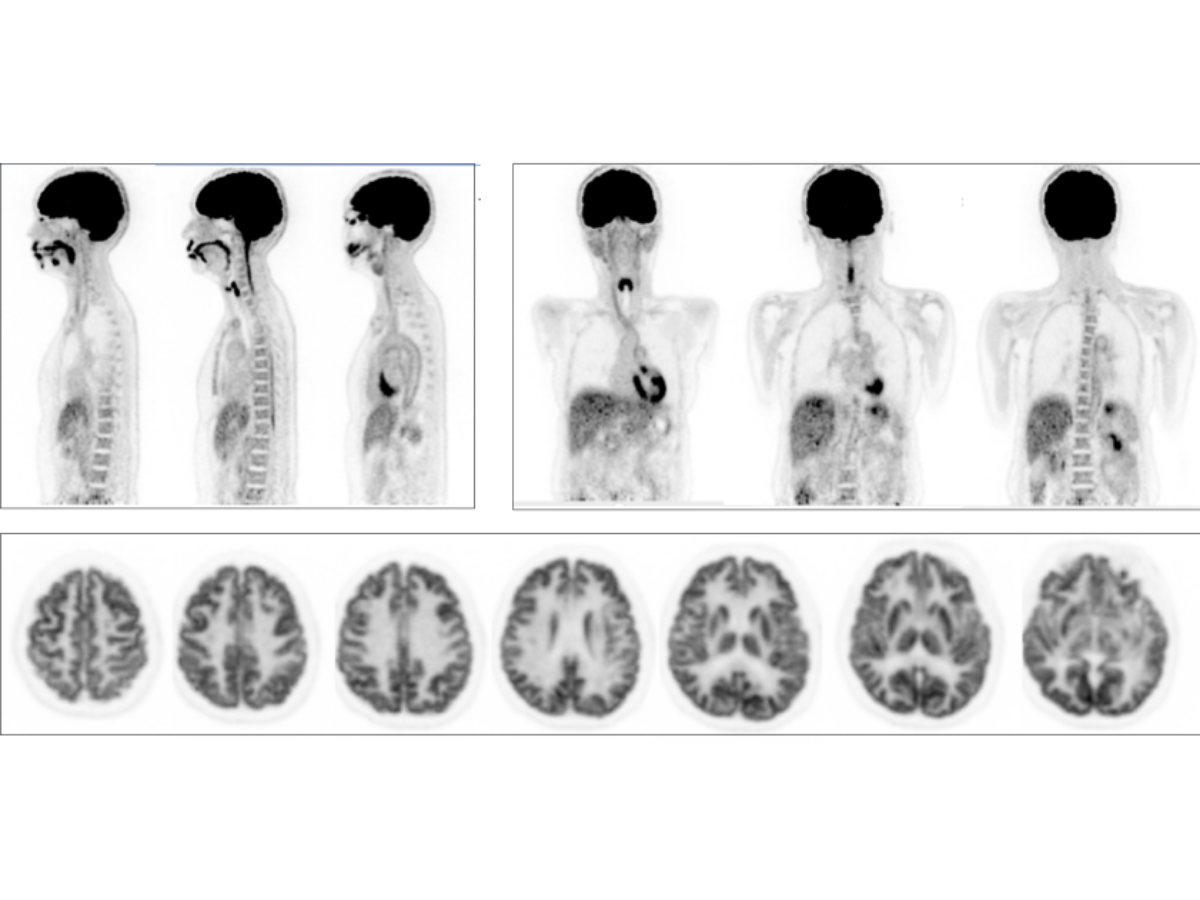
The Nuclear Medicine Imaging and Therapy Division of Radiology at Penn Medicine is widely regarded as one of the best in the nation. The Nuclear Radiology program meets all training requirements recommended by the American Board of Nuclear Medicine (ABNM). Graduates are eligible to take the ABNM Certification Examination and the American Board of Radiology Nuclear Radiology Subspecialty Examination.
Message from our Program Director
Austin Pantel, MD, MSTR
Program Director
"The Nuclear Radiology Fellowship at Penn Medicine strives to produce superb nuclear medicine physicians. Our educational program and clinical rotations provide subspecialized exposure to each facet of nuclear medicine, including PET/CT, general nuclear medicine, cardiac nuclear medicine, radionuclide therapies, and research. The world-class faculty at Penn create an inclusive and fun learning environment. Our graduates have proved highly coveted in the job market, in both academic and private practice. I invite you to apply."
Interested in applying?
Learn about program requirements and how to apply, and continue to the sections below to learn more about the program.
Contact us
Coordinator: Valerie Kenner
Department of Radiology/Nuclear Medicine Hospital of the University of Pennsylvania
3400 Spruce Street/1 Silverstein
Philadelphia, PA 19104
Contact: Valerie.Kenner@pennmedicine.upenn.edu | 215-349-5953
Learn more
To train clinically excellent academic nuclear medicine physicians that will further the discipline of nuclear medicine through scholarly pursuits, that are professional and demonstrate superb communication skills, that are reflective about their abilities, and that are able to successfully navigate through any healthcare system for the betterment of patient care.
The Nuclear Radiology Fellowship program’s principal objectives aim to:
- Teach the interpretive skills required to effectively diagnose patients using radiotracers
- Teach the technical skills required to effectively treat patients with radionuclide therapies
- Teach the safe handling and use of unsealed radioactive preparations for medical purposes
- Teach trainees a system of self-learning that will allow them to continuously adapt to an ever-changing field of medical science
- Prepare trainees for successful careers in academic medicine and clinical practice
Fellows receive instruction in theoretical and practical aspects of the field, as well as relevant basic sciences.
Each fellow receives comprehensive training in the following:
- General adult nuclear medicine - Including perfusion SPECT/CT, hepatobiliary scintigraphy, single and multiphase bone scans, infection imaging, parathyroid imaging, thyroid scintigraphy, CSF shunt studies
- Pediatric nuclear medicine - [18F]DOPA for hyperinsulimenia, FDG-PET/MR, [123I]MIBG, Meckel’s scan, renal studies (including with [99mTc]DMSA)
- Nuclear cardiology - Including SPECT/CT and PET/CT perfusion studies (with pharmacologic and exercise stress), amyloid studies, sarcoid PET
- Positron emission tomography/CT (PET/CT) - [18F]FDG-PET for oncology and neurologic disease, [18F]Fluciclovine PET, [68Ga]PSMA, [68Ga]DOTATATE/[64Cu]DOTATATE, [18F]FES-PET, [18F]NaF-PET, Amyloid and Tau PET
- Radionuclide Therapy - [177Lu]DOTATATE, [177Lu]PSMA, 223RaCl2, [131I]MIBG, radioactive iodine
- Medical nuclear physics
- Radiation biology and protection
- Instrumentation
- Radiopharmaceutical chemistry
- Medical statistics, image quantification, dosimetry, and kinetic analysis
Fellows will rotate through the following services/sites throughout the year:
- General Nuclear Medicine (Hospital of the University of Pennsylvania)
- PET (Hospital of the University of Pennsylvania)
- Cardiac Nuclear Medicine (Hospital of the University of Pennsylvania)
- Pediatric Nuclear Medicine (Children's Hospital of Philadelphia)
- PET/Cardiac/General Nuclear Medicine (Pennsylvania Hospital)
- Nuclear Medicine Therapy Clinic (Hospital of the University of Pennsylvania)
The Nuclear Medicine Imaging and Therapy Division prides itself on teaching first-hand in the clinic and at the workstation. Faculty review all studies with the fellows, maximizing each educational opportunity. Training responsibilities increase progressively over the year as the fellows gain experience.
The diverse patient population and clinical sites ensure comprehensive training in nuclear medicine. The fellows rotate through subspecialty rotations to hone specialized skills. Experience in the nuclear medicine clinic will equip the fellows with knowledge to treat patients with targeted radionuclides, a rapidly growing facet of the specialty. Fellows also complete a hands-on curriculum with the nuclear medicine technologists to gain practical experience in performing and trouble-shooting the diagnostic studies.
Fellows evenly split weekday evening call ending at 9:30pm. Fellows provide radiology coverage in accordance with radiology GME policies. There is no overnight or weekend nuclear medicine call.
A weekly specialized lecture series for the fellows reviews topics relevant to the practice of modern nuclear medicine. Lectures cover clinical topics, instrumentation, radiochemistry/radiobiology, regulatory topics, and research. The majority of faculty in the division give lectures, including both research and clinical faculty. A weekly case conference series follows each lecture. Both faculty and fellows present interesting and educational cases for discussion. Regular journal clubs complete the weekly dedicated curriculum for fellows.
Fellows also attend resident nuclear medicine lectures and resident nuclear medicine physics lectures.
Fellows share responsibility for presenting imaging findings at several case conferences throughout the year, including neuroendocrine, melanoma, breast, thyroid, and lymphoma tumor board, and epilepsy case conference. Each tumor board or case conference has dedicated nuclear medicine faculty to support the presenting fellows.
In addition to presenting multiple case conferences and journal clubs to their co-fellows and nuclear medicine faculty, fellows will prepare and present a short resident-level case conference to the Penn Radiology Residents.
Fellows visit the local nuclear pharmacy and tour the on-site cyclotron and small animal imaging facility as well.
Fellows are encouraged to participate in the research (basic science and clinical) and QA/QI activities of the division. Our highly academic division has numerous experts and ongoing research projects to which fellows can contribute.