
Apheresis Services
Overview
The Apheresis Clinic, located on 3 White/Ravdin at the Hospital of the University of Pennsylvania, performs over 7,000 procedures annually for both inpatients and outpatients who suffer from a wide variety of disorders, such as hematologic, hemostatic, immunologic, oncologic, metabolic, neurologic, and genetic, including leukemia and lymphoma, multiple myeloma, familial hypercholesterolemia, thalassemia, sickle cell disease, multiple sclerosis, and myasthenia gravis.
Using advanced apheresis technology, specialists separate patient blood into its cellular and liquid fractions to remove disease-causing substances or harvest cells in order to treat a disease. Plasma exchange is routinely used to treat antibody-mediated conditions, including myasthenia gravis, thrombotic thrombocytopenic purpura (TTP), and transplant rejection. Red cell exchange is employed to manage complications of sickle cell disease by replacing abnormal red blood cells with healthy donor cells.
The clinic plays a critical role in cellular therapy. Apheresis enables the collection of hematopoietic stem cells for transplantation and mononuclear cells used in the manufacture of advanced therapies such as chimeric antigen receptor T-cell (CAR-T) treatments. Building on Penn Medicine’s leadership in engineered cell therapy, these approaches are used to treat liquid tumors such as leukemia, lymphoma, and multiple myeloma, and are being expanded through clinical trials targeting solid tumors.
Additional specialized services include lipoprotein apheresis for patients with refractory hyperlipidemia, selectively removing LDL cholesterol and lipoprotein(a). The clinic also provides autologous blood collection for use during or after surgery, therapeutic phlebotomy, outpatient transfusion services, and infusion of manufactured cellular therapies.
The Apheresis Clinic is accredited by the Association for the Advancement of Blood and Biotherapies (AABB), the College of American Pathologists (CAP), and the Foundation for the Accreditation of Cellular Therapy (FACT).
Highlights
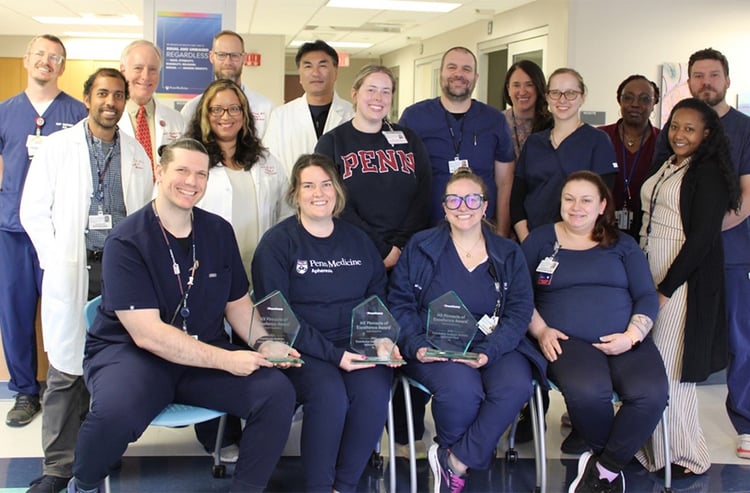
- The Apheresis Clinic received the national Press Ganey Pinnacle of Excellence Award for Outpatient Patient Experience in 2022, 2023, and 2024. The Clinic is the only outpatient clinical service at HUP to win this award.
Faculty listing
Nicole Aqui, MD – Director of Apheresis Services
Don L. Siegel, MD, PhD – Division Director
Vijay G. Bhoj, MD, PhD
Andrew Fesnak, MD, MHI
Taku Kambayashi, MD, PhD
Jeffrey Moore, RN, MSN – Nurse Manager
Research studies
Have a new study that involves Apheresis and/or the Stem Cell Lab?
Click and complete this form: Research Study Admission Intake Form
Patient care
The Apheresis Clinic is open Monday to Friday, 8:00am – 4:00pm. After-hours care for emergencies can be obtained by contacting the Pathology Resident on call.
Apheresis requests for inpatients should be directed to the Apheresis Resident listed in QGenda.
Scheduling for apheresis for outpatients or established patients should be directed to the Clinical Practice Lead, Melissa Murter, RN BSN, at 215-662-3441 or Melissa.Murter@pennmedicine.upenn.edu.
Contact
Nicole Aqui, MD
Apheresis Services
Division Director, Transfusion Medicine and Therapeutic Pathology
215-615-4344
Aqui@pennmedicine.upenn.edu
Jeffrey Moore, BSN, RN
Nurse Manager, Apheresis Clinic
215-615-0438
Jeffrey.Moore@pennmedicine.upenn.edu