
PCD Accelerates Hematologic Cancer Testing With HEXS
March 2, 2026
In hematologic malignancies, particularly acute myeloid leukemia (AML) and myelodysplastic syndrome (MDS), the combination of histomorphology and molecular analysis is crucial for diagnosis. Additionally, molecular findings provide key insight into prognosis and treatment. Targeted therapies based on molecular findings have significantly improved outcomes for these patients.
Guidelines for molecular testing in AML recommend both genomic markers and an ideal turnaround time (TAT) to results. Per guidelines, genes such as IDH1/2, FLT3, and NPM1 should have results within 3 to 5 days. While some molecular tests have rapid in-lab TATs (e.g. PCR-based tests and cytogenetics), others like next-generation sequencing (NGS) often have TATs of 14-21 days, extending the timeline for a complete diagnostic workup. Many labs use a combination of rapid PCR and cytogenetics testing and NGS to meet TAT requirements creating operational inefficiencies.
To overcome these challenges, the Division of Precision and Computational Diagnostics (PCD) validated and launched the Hematological Expedited Sequencing (HEXS) panel in the Molecular Pathology Laboratory at HUP. This test uses DNA isolated from peripheral blood and bone marrow aspirates in purple top (EDTA) tubes and bone marrow core biopsies in saline. HEXS detects single nucleotide variants (SNVs), and insertions/deletions (indels) across 58 genes, including NPM1, TP53, IDH1/2, and FLT3 (ITDs ≤ 84 nucleotides).
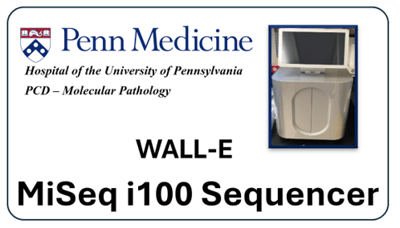
Despite being an NGS assay, HEXS is faster than other NGS test options, made possible in part by purchasing a rapid sequencer, the Illumina MiSeq i100 Plus, with a CPUP Strategic Growth Award. The MiSeq i100 instrument sequences runs in approximately 7 hours, a reduction of ~70% of alternative sequencer times. HEXS allows consolidation and improvement of workflow efficiencies for the PCD.
The in-lab turnaround time for this assay is 3-5 days, 3-4x faster than current NGS tests and in line with other molecular pathology assays. This is important for faster diagnosis and identification of therapeutic options. Feedback from the clinical leukemia oncologists has been extremely positive noting it as a ‘fantastic’ change that ‘greatly improves and expedites care’ for some of the hospital’s sickest patients.
Innovation alone isn’t enough. Its value comes from the people who bring it to life at the bench each day. The work that technologists Lucia Robertson, Zhenying Lui, and Margaret Tawedrous put into performing this assay isn’t just a step in the process – it’s the backbone of the entire effort. When asked how it feels to be working with such innovative technology both within their division and in the broader diagnostic community, the technologists agreed it was ‘exciting, particularly given how great the impact seems to be for patient care’.
vWhen they were asked how the outcomes of HEXS influence their feelings about their daily work, they described it as "touching - a reminder that [they’re] here for a meaningful purpose’. They noted that hearing about these outcomes reconnects them to the real impact they have on patients and families, particularly when the multitude of daily tasks may make it easy to lose sight of that connection. It serves to link their daily routine back to the reason they are doing this important work.
Thank you to HUP Executive Team for the strategic investment; the HEXS project team - AmandaSue Landi, Sarah Herlihy, Braulio Cappas-Navarro, Abhimannyu Rimal, Caren Gentile, Akshay Chitturi, Simon Chen; and to the many hands that perform the daily work, including technologists, managers, variant reviewers, and attendings. Your collective efforts are invaluable to our success.