

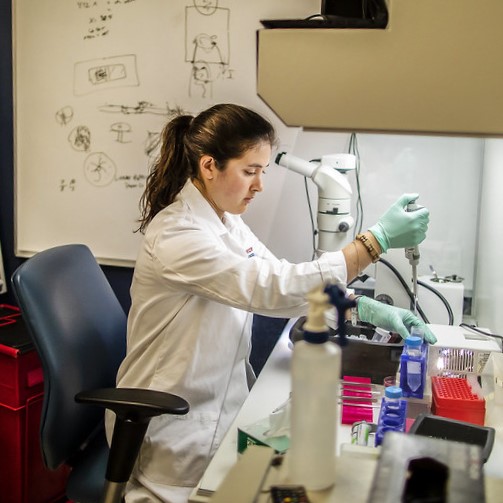
Research and innovation are central to our academic mission of developing new treatment strategies and improving patient outcomes. As such, they are a core part of our curriculum for resident training. We aim to train neurosurgeon-scientists and leaders who will define the future frontiers of neurosurgery.
The 12 months of protected research time during the 5th year of the residency program are the heart of the research experience. Up to an additional 8 months of elective time during the 6th year of the program can also be applied to research. Beyond this time, residents are encouraged to view their research training through a longitudinal lens that stretches across all years of the residency program, in preparation for the realities of academic careers.
With this, our residents have their work being featured in major scientific publications every year. To view the latest research that includes our residents, you can use this link.
Research opportunities
A wide array of research opportunities are available to residents within the Department of Neurosurgery as well as throughout the greater University of Pennsylvania community. Within the Department, there have been longstanding strengths in the areas of traumatic brain injury, neuro-restoration, neuro-oncology, and spine surgery outcomes. Other labs and research programs in our Department have expanded our research expertise into human neurophysiology, neuromodulation for neuropsychiatric disorders, tumor immunology, and cerebrovascular clinical trials.
Residents have also successfully partnered with collaborators at the Perelman School of Medicine, School of Arts and Sciences, School of Engineering, and the Wharton School to develop basic science and translational projects. These opportunities include the neurophysiology and neuromodulation of human memory, neuroengineering and therapeutics, CNS gene therapy, brain tumor organoids, and the genetics of vascular malformations.
Funding opportunities
Residents are encouraged to apply for individual awards to support their research efforts. In the past, residents have successfully acquired NIH F32 grants, Neurosurgery Research and Educational Foundation (NREF) awards, and industry-sponsored grants. Training grants are also available to fund resident research. Now available to residents is the UE5 program. Residents also have access to the T32 Brain Injury Training Grant and the T32 Training Grant in Neuroengineering and Medicine, among others.