
The Global Health Equities (GHE) residency track is an initiative designed to:
- Provide educational opportunities that will nurture and train health professionals who want to focus their careers on addressing health disparities domestically or globally.
- Promote physician advocacy and service through working with our community and global partners to improve health care and medical education in our partner sites.
There are four major components of the track:
Didactic Curriculum
Recognizing that patients and health care providers are constrained by the socioeconomic and political context in which they work, this program strives to include education on the inequities and structural barriers that are important factors in the creation of health or disease for many populations around the world.
The components of the Didactic Curriculum are:
- 2 week JAR seminar: core block for track residents in PGY2 that explores contextual issues in global and community health and examines different strategies used to address health disparities. Also included are simulation cases and skill sessions in bedside ultrasound, microbiology, and ethical challenges.
- Online Curriculum: a web-based curriculum with both self-guided modules on the epidemiology and clinical aspects of major diseases, bioethics and clinical unknown cases.
- Resident Report Presentations: each resident leads a Resident Report about a topic on which s/he is working. The topic may be drawn from residents' scholarly project, their abroad experience or their community continuity site work.
- Career Building: faculty provide on-going mentoring and support for residents as they develop their career plans, making connections and defining goals for a career in global health.
- Invited lectures and discussions: in partnership with the Penn Center for Global Health in the School of Medicine and CHOP’s Center for Global Health, residents attend seminars and meet with invited guests to campus.
Clinical Experience:
- Global Electives: each resident will be able to spend 4 weeks abroad in the PGY2 year and 4 weeks in their PGY3 year. The PGY2 year is focused on clinical care, whereas the PGY3 time abroad may be either clinical or, where appropriate, spent working towards the resident’s scholarly project goals in areas such as clinical research, QI, policy/advocacy or medical education. Currently, the GHE track is working with sites in Botswana, the Dominican Republic (Med/Peds), Rwanda and the Indian Health Service. The goal is for the program to engage in long-term relationship building that will allow mutually beneficial exchange of ideas and capacity building for both partners.
- Community-Based Clinics
In addition to the residents' primary continuity clinic, GHE track residents work in a second continuity clinic site focused on medically underserved communities in Philadelphia.
Sites include:
- Prevention Point Street-Side Health Project
- Philadelphia County Prison Health
- Jonathan Lax Center/Philadelphia FIGHT
- Puentes de Salud
- Refugee Clinic
Scholarly Project
All internal medicine residents complete a scholarly project, and residents in the GHT select a topic relevant to global or community health equity. The format for the activity itself is flexible and can range from clinical research to policy/advocacy, quality improvement, curriculum, or a community service project.
Career building and Community
Recognizing that many residents who choose this program are looking towards careers in global health, this program supports residents to develop on their career path through mentorship, conferences and connections. The global health program aims to foster relationships between program participants and experts in the field of global health and alumni of the track. The GHE track group also gets together at social events, reports, campus lectures, and potlucks to have informal discussions as well as present and workshop their projects.
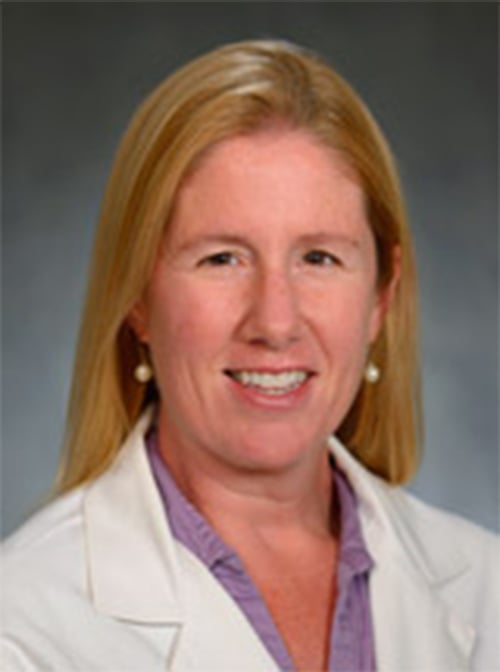
Carol A. McLaughlin, MD, MPH, MSc, DTMH
Director
Dr. McLaughlin is an HIV/Infectious Disease specialist at Penn Presbyterian and is the director of the global health equity residency track. She is also senior advisor and founding team member at the Center for High Impact Philanthropy housed at Penn’s School of Social Policy & Practice (SP2) where she develops guidance for donors seeking maximize the social impact of their philanthropic giving. She is actively involved in teaching and mentoring in global health and she co-directs the global health track in Penn’s MPH program. She is engaged in public health programs surrounding delivery of community based interventions, immigrant health, impact measurement, and HIV prevention and treatment. Dr. McLaughlin holds an undergraduate degree from Princeton University’s School of Public and International Affairs. She received MD and MPH degrees from the Johns Hopkins University, School of Medicine and School of Public Health. After residency training in internal medicine and pediatrics through the Harvard Combined Program, she completed a fellowship in infectious disease at the Hospital of the University of Pennsylvania. She received additional training in epidemiology and community-based research through the MSCE degree program at the University of Pennsylvania and earned a Diploma in Tropical Medicine and Hygiene from the Gorgas Memorial Institute in Peru.
Mosepele Mosepele, MD
Site Director, Botswana
Dr. Mosepele is an Infectious Disease specialist at Princess Marina Hospital in Gaborone, Botswana. He was born and raised in Botswana. At the age of 19, Mosepele spent his year of national service working in the pathology lab at Princess Marina Hospital in Gaborone. Then, because Botswana didn’t have a medical school, he attended the University of Melbourne in Australia to earn a joint undergraduate and medical degree. He returned to Princess Marina Hospital and, a year and a half after finishing medical school, became Head of the Infectious Disease Care Clinic. In his training in Australia, he’d seen only one patient with HIV. Now he was in charge of one of the largest AIDS clinics in Africa, providing treatment to thousands of patients. It was demanding work, but he thrived. After his clinical experience, Mosepele went to the Hospital of the University of Pennsylvania for his internship and residency in internal medicine. While in Philadelphia, he worked in the Prison Health System, providing HIV care for inmates. He did his fellowship in Infectious Disease at Massachusetts General Hospital and Brigham & Women’s Hospital. He also received his Masters in Clinical Epidemiology from the Harvard School of Public Health.
Aaron Price, MD
Site Director, Indian Health Service Rotation
Dr. Price is Chief of Internal Medicine at Tsehootsooi Medical Center in Fort Defiance, AZ on the Navajo Nation. Heis a member of the Navajo Nation born and raised in Fort Defiance, AZ. After graduating from medical school, Dr. Price went on to the University of Nevada-Las Vegas, where he completed an internship in Emergency Medicine. Dr. Price then returned to the University of New Mexico, where he completed a residency in Internal Medicine with an emphasis in Cardiovascular Medicine.
Jennifer Cohn, MD, MPH
Director, Global Health Policy Elective
Dr. Jennifer Cohn is an Infectious Disease physician with a focus on improving access to and uptake of effective health products and models of care in low- and middle-income countries. She currently serves as the Global Access Leader for the Global Antibiotic Research and Development Partnership (GARDP), and is a clinical associate profession of Infectious Diseases and Scholar at the Center for Global Health at the University of Pennsylvania School of Medicine. Before joining GARDP, Jennifer served as Senior Vice President for Cardiovascular Health at Resolve to Save Lives, Senior Director of Innovation at the Elizabeth Glaser Pediatric AIDS Foundation, and as the Medical Coordinator for the Doctors Without Borders (MSF) Access Campaign. Jennifer has served on international advisory groups for TB, HIV, non-communicable diseases and viral hepatitis. She has published over 80 papers in peer-reviewed medical journals. Jennifer received her medical degree from the University of Pennsylvania School of Medicine, is board certified by the American Board of Internal Medicine in Internal Medicine and Infectious Dis4eases and earned her Masters in Public Health from Johns Hopkins School of Public Health. She completed residency and fellowship training at the Hospital of the University of Pennsylvania, and is a past director of the Global Health Equities Track.
Robin Canada, MD
Core Faculty
Dr. Canada is on faculty in the Division of General Internal Medicine. She has devoted her life to the care of underserved and vulnerable populations. She teaches and mentors medical students and residents about finding “global health in our backyard.” She started a Community Medicine Immersion Curriculum for the Primary Care residents, inviting speakers to teach about the social determinants of health and creating a clinical experience the city health centers in West and Southwest Philadelphia. In addition, she is one of the Core Faculty at Puentes de Salud, a clinic for undocumented Latinos on 17th and South Streets, where she teaches and precepts medical students and residents. After graduating residency, Dr. Canada worked with the Indian Health Service. She has a deep passion for this population, and has created an Indian Health Service elective on the Navajo Nation in Ft. Defiance, Arizona for Internal Medicine residents. Since her return to Penn, many Penn IM residency graduates have taken positions with the Indian Health Service!