Our program is organized into a 6+2 block scheduling system that applies to all of our interns, as well as our categorical residents. House staff spend up to six weeks on inpatient services or elective rotations, followed by two weeks in the ambulatory or elective setting. This system simplifies scheduling, makes it predictable, and separates inpatient from outpatient responsibilities. We feel that it increases house staff camaraderie by creating cohorts that travel through the year together. It helps ensure outpatient continuity by making our resident providers available to their patients at regular intervals. Additionally, the regularly scheduled breaks from more intense inpatient rotations helps to mitigate fatigue and burnout.
There is a robust curriculum on all of our rotations.
While on the wards
- Morning Teaching – rotation specific topics usually 8:30-9:00.
- Mid-Day Conferences – occur on weekdays at all 3 hospitals and is usually a case-based presentation emphasizing clinical reasoning.
- Ultrasound Curriculum – both on the wards and electives, occurs in multiple settings – watch the video.
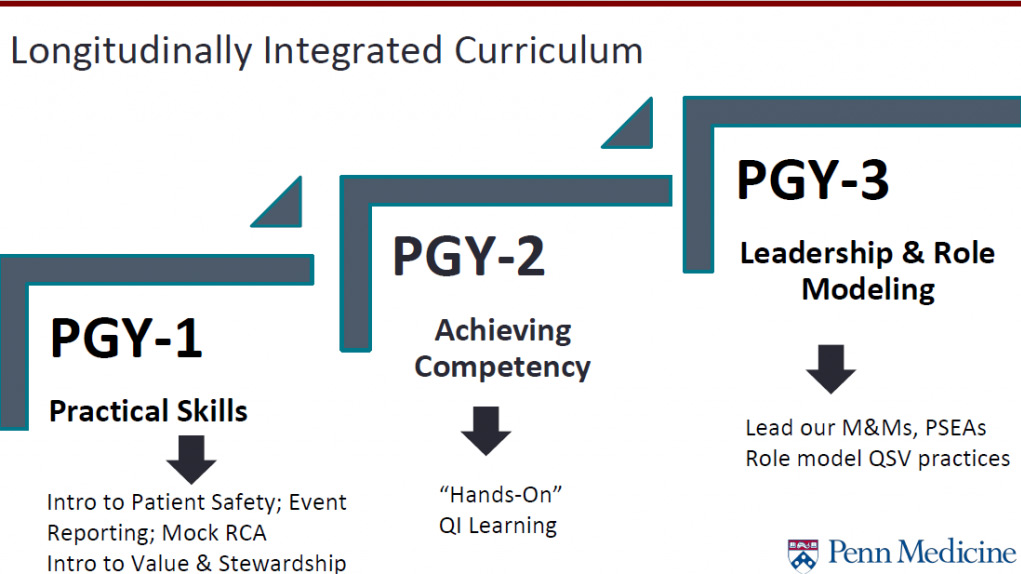
- Quality Improvement and Patient Safety Longitudinal Curriculum
While on the ambulatory block
- Outpatient general internal medicine continuity practice, with 3 sessions weekly as a partner in a faculty / resident outpatient practice.
- Concentrated outpatient office-based exposure to medicine specialties.
- Theme-based small group didactics that cover topics within internal medicine and its subspecialties.
- Core curriculum didactics which include topics such as quality improvement, evidence based medicine, and communication.
- In PGY2 and PGY3 years, one longitudinal subspecialty clinic half-day per week with a faculty member or specialty of your choice
- One half-day per week for personal wellness (protected time for residents to attend to self-care needs including healthcare appointments).
- Program funding for each group on ambulatory block to participate in an out of hospital get-together. Events have ranged from pumpkin carving to rooftop dinners.
Research training
All categorical housestaff are required to engage in a scholarly project, which can be broadly defined as participation in clinical or basic science research, critical reviews of the literature, case reports and series, book chapter or community service activities. Residents are encouraged to both publish their work and present at national meetings which is sponsored by the Department of Medicine.
Department of medicine’s TEchnology augmented modalities in medical education
Ultrasound curriculum
For more information, please visit:
Penn Point of Care Ultrasound Education (POCUS)
POCUS Internal Medicine Resident Targeted Curriculum
Quality improvement and patient safety curriculum
Quality improvement
Quality Improvement (QI) is taught through a variety of curricular activities. All residents are involved in population health and panel management activities during their outpatient training. They receive quality metric data about their own panel of outpatients and work with their longitudinal preceptor to improve care delivery.
All PGY-2 residents participate in a team-based longitudinal QI project. They learn QI principles and tools in an experiential manner by working on real problems that impact the quality of patient care within the residency program or department. Each PGY-2 cohort is supervised by a member of the faculty who has expertise in QI. Residents have the opportunity to participate in scholarship related to the project. Past resident-led QI work has included reducing disparities in colorectal cancer screening, improving time to antibiotics in inpatient sepsis management, reducing unnecessary lab testing, and improving the outside hospital transfer process.
Patient safety
We have a robust patient safety curriculum that begins in the intern year. All interns participate in an interactive small group work which focuses on practical skills in patient safety event reporting and root cause analysis of safety events at Penn Medicine. This includes an interactive root cause analysis involving peers from other residency training programs. Additionally, all residents learn skills in adverse event disclosure and the real-time analysis of safety events on interprofessional inpatient teams. We also have a recurring case-based noon conference which is led by residents and faculty and focuses on topics including M&M, good catch cases in patient safety, and GME-wide themes in patient safety.
Residents who are interested in exploring quality improvement and/or patient safety as a career can apply to the Healthcare Leadership in Quality Track during the fall of their intern year.