
Cardiovascular disease fellowship training, as a subspecialty of internal medicine, has been available at the Hospital of the University of Pennsylvania (HUP) since 1973. Our program was first accredited by the ACGME in 1987 - with a complement of 18 fellows. In recent years, our ACGME cardiovascular disease training program complement has increased to 36 fellows, 12 fellows per year, making us one of the largest and best training programs in the United States.
Our training program has three inpatient training sites, including the Hospital of the University of Pennsylvania, Penn Presbyterian Medical Center and the Corporal Michael J. Crescenz Veterans Affairs Medical Center. In addition to primary inpatient training sites, our program also has several ambulatory training sites: including the Perelman Center for Advanced Medicine, Penn Presbyterian Medical Center, and the Corporal Michael J. Crescenz Veterans Affairs Medical Center.
Our fellowship training program started a Clinical Track in 2025 for select fellows who are focused on becoming outstanding clinicians. Years 1 & 2 of the clinical tracks are identical to all other fellows core curriculum, however, Clinical Track fellows spend their third year primarily at PPMC. Learn more about our Clinical Track.
The new patient pavilion - The Clifton Center for Medical Breakthroughs
Our core cardiology inpatient services, including our intermediate and critical care cardiac floors, procedural areas, and echocardiography lab, has moved into our New Patient Pavilion in late 2021, and has opened many new opportunities for reimagining our inpatient cardiovascular medicine education experiences. Check out an overview of it below!

Location
The cardiology fellowship program is centrally located in the Perelman Center for Advanced Medicine (PCAM) on the campus of the University of Pennsylvania. In addition to the Hospital of the University of Pennsylvania (HUP) fellows will spend time at Penn Presbyterian Medical Center (PPMC) and the VA Hospital. Three of our primary training sites are located within a 10 minute walk of each other within the University City section of Philadelphia.
Highlights at each location include dedicated space for the fellows. At PCAM desk space + computer for each fellow, all of which is located within steps of our fellowship conference room (redesigned in March 2020 with state-of-the-art broadcast/videoconference/recording facilities), fellowship administration offices, most division faculty offices, inpatient/outpatient care areas, and the new Jordan Medical Education Center, used by the Perelman School of Medicine for medical student teaching. At PPMC, fellows have a dedicated work space within the PHI building, including desks and computers.
University of Pennsylvania Health System Graduate Medical Education
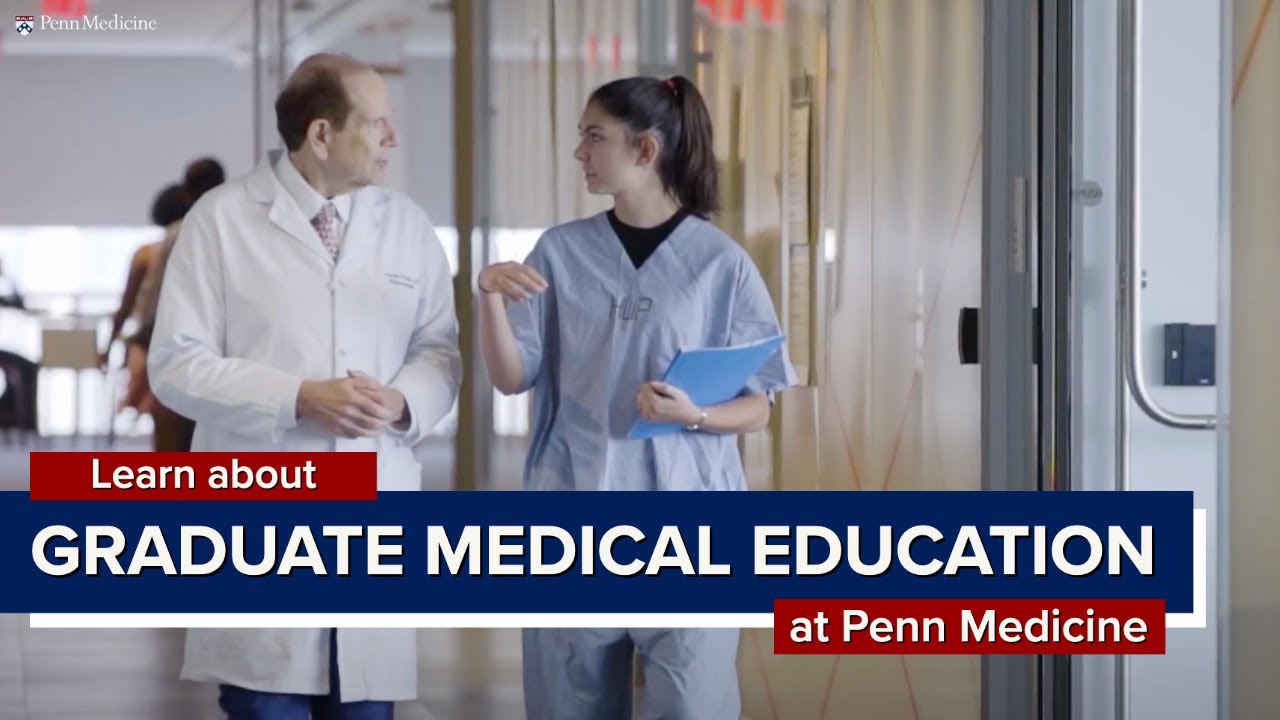
Our fellowship training program is part of a rich graduate medical education (GME) environment. Visit the GME website and see below for a video introduction to GME at our institution.
Mission and vision
Our mission is to train outstanding cardiovascular physicians and scientists who will become leaders and role models in academic cardiovascular medicine. We do this by devoting our time, talents, and energy to:
- Patient care
- Research
- Teaching
We achieve this through tailored, individualized training designed with attention to the needs of our fellows in a supportive learning environment.
Our vision is to create a comprehensive training program in cardiovascular medicine that nurtures the development of fellows who have the potential to:
- Contribute to medical knowledge through research (basic, translational type 1 and 2, and clinical research/epidemiology/health system science)
- Assume leadership roles in academic medicine
- Continue this tradition of excellence by teaching others
We value in our faculty and fellows:
- Clinical excellence
- Scholarship
- Dedication
- Integrity/Professionalism
- Service
- Teamwork
The core competencies we teach are:
- Patient Care: Identify, respect, and care about patients' differences, values, preferences, and expressed needs; listen to, clearly inform, communicate with and educate patients; share decision making and management; and continuously advocate disease prevention, wellness, and promotion of healthy lifestyles, including a focus on population health.
- Medical Knowledge: Established and evolving biomedical, clinical, and cognate (e.g. epidemiological and social behavioral) sciences and the application of knowledge to patient care.
- Practice-Based Learning and Improvement: Involves investigation and evaluation of one's own patient care, appraisal and assimilation of scientific evidence, and improvements in patient care.
- Interpersonal and Communication Skills: Resulting in effective information exchange and teaming with patients, their families and other health professionals.
- Professionalism: Commitment to carrying out professional responsibilities, adherence to ethical principles and sensitivity to patients.
- Systems-Based Practice: Actions that demonstrate an awareness of and responsiveness to the larger context and system of health care and the ability to effectively call on system resources to provide care that is of optimal value.